


Customers cannot find you online, or they find an old page that is out of date.
Business Websites
A website that helps customers find you and get in touch.
We build websites for businesses and organisations in Zambia. Whether you call it web design, website design or web development, the job is the same: a site that works on a phone, says clearly what you do, and makes it easy for customers to reach you on WhatsApp, by phone, or by email.
What You Get
What you actually get.
A website that goes live with the pages your customers look for: what you do, who you are, how to reach you, and the documents buyers ask for. As a web design and development company working out of Lusaka, we build it to open quickly on a phone, including on the slower connections many customers are using, and we keep it current as your business changes. We build on WordPress where that suits your business, and as a custom build where it does not. You own your domain and your content.
Tender suppliersConstruction companiesLaw firmsPrivate clinicsConsultantsTraining organisationsNGOs and associationsSmall and medium-sized businessesCorporate organisationsProfessional practicesNon-profit organisations
Sound Familiar?
If any of this sounds like your business, a website will help.
Your company details are spread across WhatsApp, old PDF profiles, brochures, and social media.
You or your staff send the same company profile and price list by hand, over and over.
Buyers, tender committees, or partners ask for proof that your business is real.
People looking on a phone cannot find your services, your location, or your number.
Social media is your only public presence, and you do not control it.
Enquiries come in and then get lost, with no record of who asked what.
What We Build
The parts of a website that do real work for your business.
Pages that explain your business
- Home page that says what you do in one sentence
- Services written in plain language
- About page with your registration and compliance details
- Contact page with your address, phone, and map
- Gallery or project pages for work you have done
- Online shop for products, if you sell them
- News or notice pages you can add to
- Quote request page
Ways for customers to reach you
- WhatsApp button that opens with a message already written
- Click-to-call phone number
- Enquiries sent straight to your business email
- Directions and office visit details
- Enquiries you can tell apart, so you know what each customer wants
Documents buyers ask for
- Company profile to download
- Tender and contract experience
- Supplier and registration information
- Brochures and price lists
- Notices and announcements
- Branch and location details
Built to load on a phone
- Works properly on a phone, not just a laptop
- Pages set up so Google can read and list them
- Visitor numbers you can look at, if you want them
- Hosting set up and secured
- Backups, so nothing is lost
Easy to keep current
- Update your own text and prices, if you want to
- Add a service or a new page later
- Change your company profile
- Fix a phone number or address in one place
- Have us handle updates instead
Our Work
Websites we have built.
A few of the websites and systems we have built or run ourselves. Where the work was for another business, we say so.
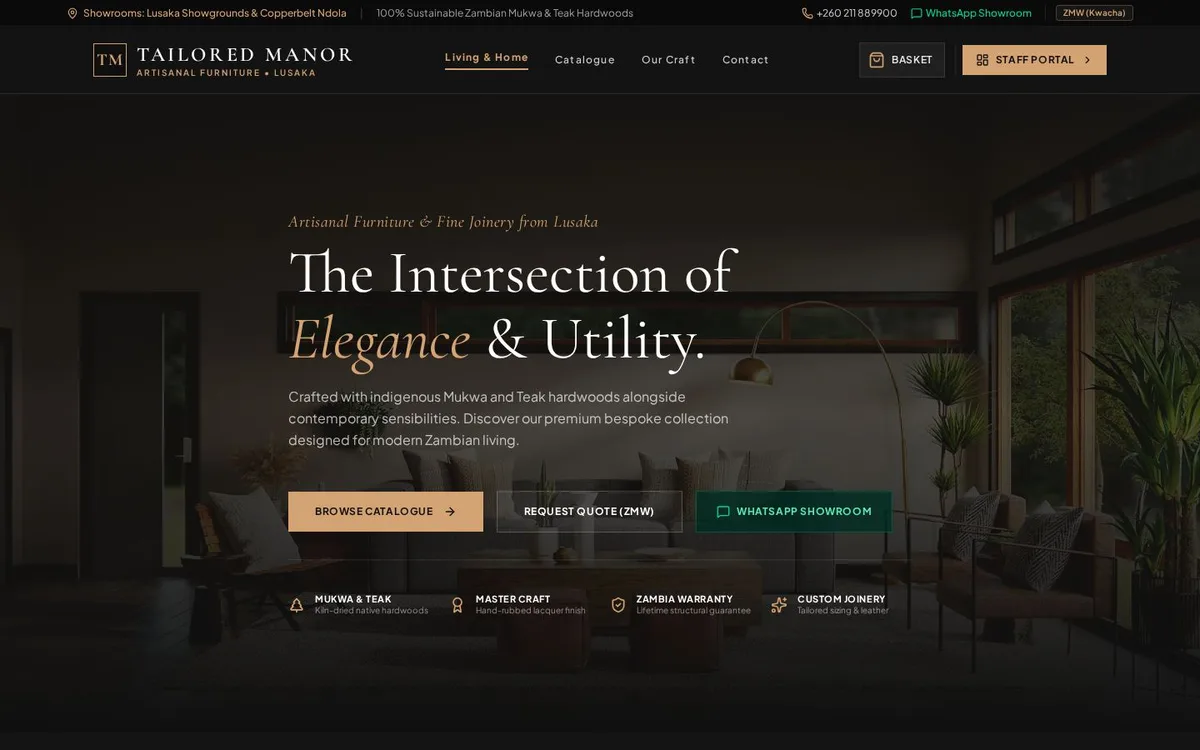
Own project
Tailored Manor
Furniture and joinery business in Lusaka. Product catalogue, showroom details for Lusaka and Ndola, prices shown in kwacha, and a staff area behind the scenes.
Visit the live site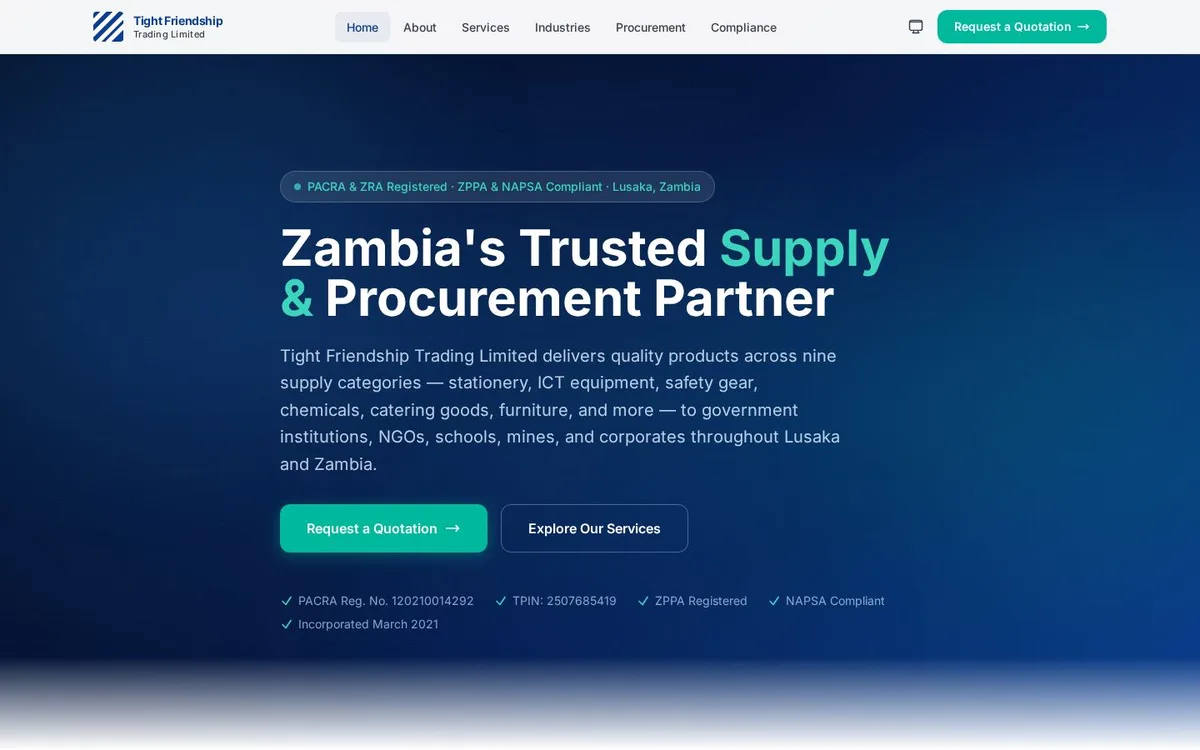
Built for another business
Tight Friendship Trading Limited
A registered Zambian supplier's company website. Sets out nine supply categories, its PACRA, ZRA, ZPPA and NAPSA compliance details, and a route to request a quotation.
Visit the live site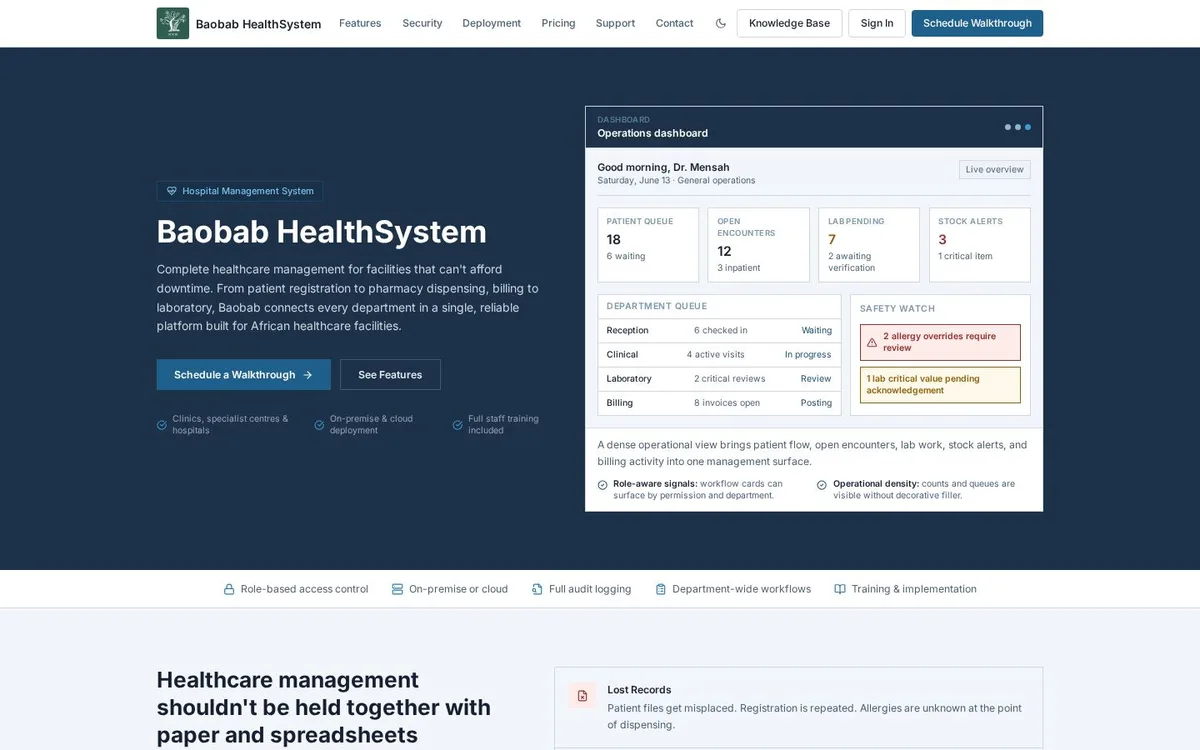
Built for another business
Baobab HealthSystem
A hospital management system for clinics and hospitals. Patient records, pharmacy, laboratory and billing, with the features, security notes and pricing all explained.
Visit the live site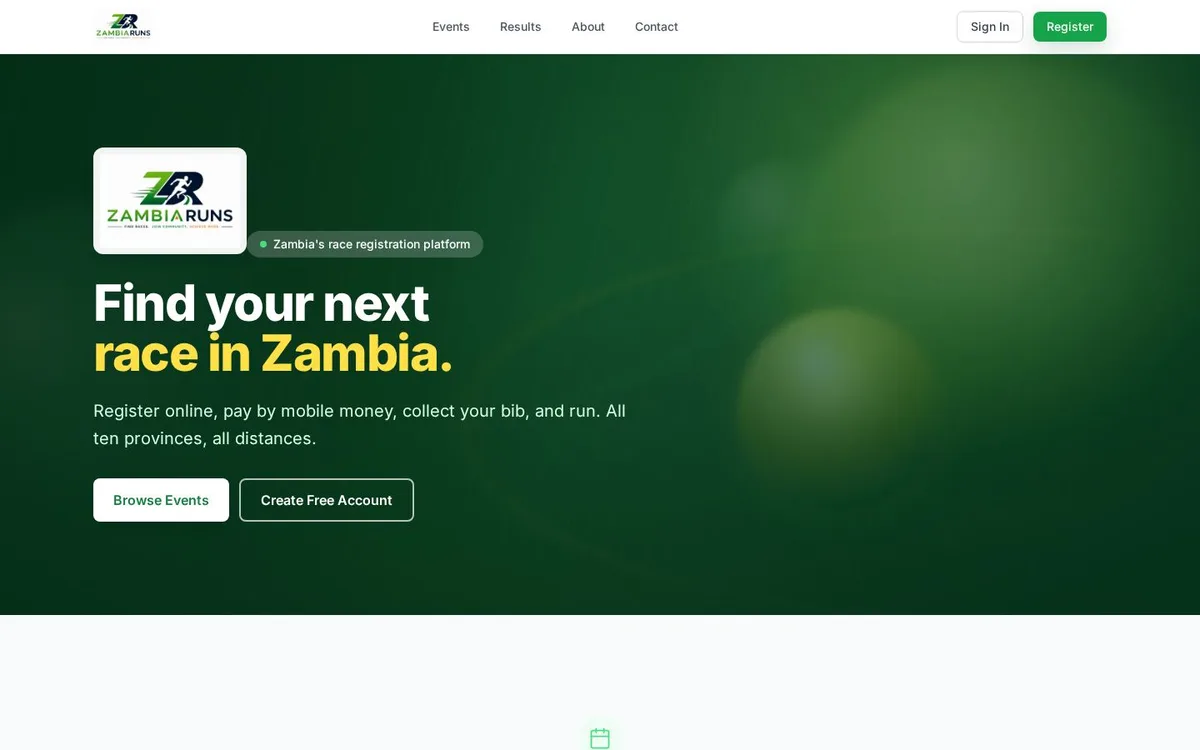
Own project
ZambiaRuns
Race registration platform for Zambia. Runners register online, pay by mobile money, collect a bib, and find official results afterwards.
Visit the live site
Own project
Tumpe Tech
This website. Eleven languages, document downloads, a published pricing structure and clear enquiry routes, built and maintained by us.
Visit the live siteHow It Works
From first call to going live.
We start by understanding your business, then build the site in clear steps. You see it and approve it before it goes live.
We talk about your business and what customers need to find
You send what you already have: profile, price list, photos, logo
We plan the pages and send you the structure to approve
You check the words, and we write or tidy them where needed
We design and build the site
You review it on your own phone and on a computer
We test that WhatsApp, phone calls, and email all reach you
We connect your domain, hosting, and business email
The site goes live
We stay available for updates and changes
How Long It Takes
How long a website takes.
These are the working times once we have your content and approvals. The build itself is quick; the waiting is usually on information.
Small business website
About 3-5 business daysStandard website
About 5-10 business daysLarger or custom project
Quoted to your scopeThese times assume your content, approvals, and domain or hosting access are ready. We agree a target date before we start, and we do not promise a date we cannot keep.
What It Costs
What a website costs.
Website pricing follows the scope of the work, not a fixed package. That is why we ask what you need before quoting: a five-page site for a small business and a site with an online shop, payments and customer logins are not the same job.
You get an itemised quote within one business day, and you are free to compare it with anyone else. Nothing is charged until you approve the quote.
- How many pages you need, and how much content we have to write or tidy
- Whether you need an online shop (ecommerce), bookings, or customer logins
- Whether the site has to connect to other systems you already use
- Domain, web hosting and business email, if you want us to set those up
Ownership
What stays yours.
Your domain
Your domain name is registered in your name and stays yours, even if you stop working with us. We show you how to get into it.
Your content
You approve every word, price, and image before it goes live, and you can take your content with you at any time.
Renewals and running costs
Domain, hosting, and any other services renew on their own schedules. We tell you what renews, when, and how much, before you commit.
How We Work With You
Build it once, or keep it looked after.
Build a new website
For a business that needs a new site, or a proper rebuild of an old one.
- Planning and page structure
- Writing and tidying your content
- Design and build
- Testing on phone and computer
- Getting it live
Keep it up to date
For when your services, prices, staff, or documents change and the site needs to keep up.
- Text and price changes
- New services or pages
- Hosting and domain renewals handled
- Business email support
- A look at your visitor numbers
- A yearly check that everything still works
More Than a Website
We can handle the rest of your business technology too.
A website is usually one part of a bigger job. Many of our customers also need a professional email address on their own domain, or want their company profile and tender documents printed and bound. Because we do that work too, you deal with one supplier instead of three, and the website, the email, and the printed documents match. You deal directly with the people doing the work rather than being passed around a large agency. You take only what you need; nothing is bundled in unless you ask for it.
Common Questions
Questions people ask us.
How much will my website cost?
It depends on the size. A simple five-page site and a site with an online shop and customer logins are very different jobs, so there is no single fixed price. Tell us what you need and we send an itemised quote within one business day, free and with no obligation.
How long will it take?
A small business website usually takes about 3 to 5 business days, and a standard website about 5 to 10. Larger projects are quoted to scope. Most of the time goes on getting your content and approvals ready rather than on the build, so the sooner we have your information, the sooner you are live.
Can I update the website myself?
Yes. We can set it up so you can change text, prices, and photos yourself, and we will show you how. If you would rather not, we handle the updates for you.
Can you also set up my domain, hosting, and business email?
Yes. We register or move your domain, set up hosting, and set up professional email on your own domain, so customers see [email protected] instead of a free email address. You can take those on their own or as part of the website work. Printing and document work is available too if you need it.
Will my website show up on Google?
We build every site so Google can read it properly, with clear page titles, a sitemap, and pages that load quickly. Where you rank depends on your competition and how long the site has been up, so nobody can promise you the top spot. We will tell you honestly what to expect in your industry.
Do you build WordPress websites?
Yes. We do WordPress website design and development in Zambia, and custom builds as well. Which one we suggest depends on your budget and on how much you want to update the site yourself. You do not have to decide that on your own; we will walk you through it.
Next Step
Tell us about your business and we will tell you what your website needs.
Send us what your business does, what you want customers to be able to do, and your current website if you have one. We reply with a clear next step and an itemised quote.